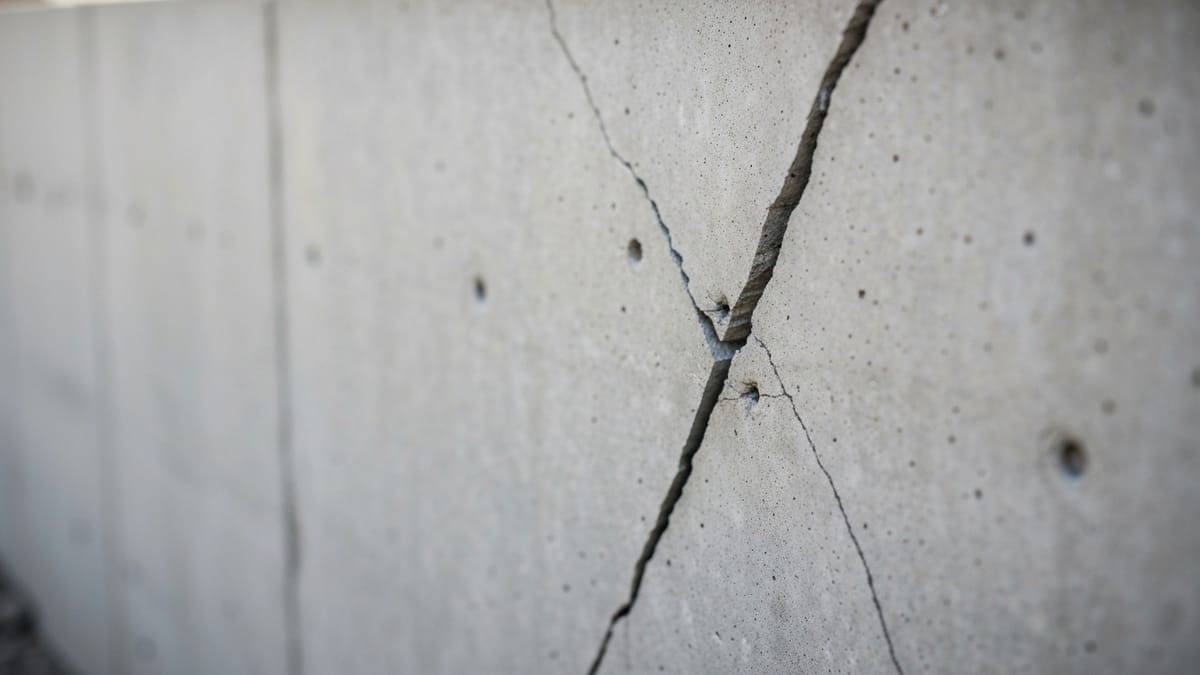
Low end
$250
Typical range
$250 - $5,000
High end
$5,000+
Start With the Crack, Not the Price
The single biggest mistake homeowners make with foundation cracks is treating them all as the same repair. They are not. A crack is either cosmetic, a water problem, or a structural symptom, and each one has a completely different price and fix.
Before you look at any number, figure out which kind you have. The rest of this guide is organized that way, because the crack type sets the cost, not the other way around. For help reading the crack itself, see the foundation cracks diagnosis guide.
Cost by Crack Type and Method
| Crack Type | Typical Method | Cost Range |
|---|---|---|
| Hairline / shrinkage | Surface sealing or minor injection | $250-$800 |
| Vertical / diagonal (leaking) | Epoxy or polyurethane injection | $400-$1,500 |
| Horizontal / bowing-related | Carbon fiber straps or wall anchors | $2,000-$7,000 |
| Stair-step in block wall | Injection plus reinforcement | $1,000-$5,000+ |
| DIY hairline (any of above, minor only) | DIY injection kit | $20-$100 |
The table hides an important point: the first two rows fix the crack, but the third and fourth rows fix the wall. If your crack is a symptom of settlement or a bowing wall, filling it does nothing for the underlying movement.
Hairline and Shrinkage Cracks: $250-$800
Thin, hairline cracks in poured concrete are extremely common and usually harmless. Most are shrinkage cracks that form as concrete cures in the first year or two, and they are typically vertical, narrow (under 1/16 inch), and stable.
If the crack is dry and not growing, it is cosmetic. Professional sealing runs $250-$800, and many contractors will do several in one visit. If it weeps water, it moves up into injection territory, covered next.
This is the one category where DIY genuinely makes sense. A hairline crack that is dry or only slightly damp is a safe candidate for a $20-$100 crack repair kit, as long as it shows none of the structural warning signs described below.
Vertical and Diagonal Cracks: $400-$1,500
Vertical and near-vertical cracks that leak, or diagonal cracks that stay under about a quarter inch, are usually repaired by injecting the crack full-depth with epoxy or polyurethane. This is the core of the epoxy crack injection service, done from inside the basement in a few hours with no excavation.
Interior injection runs $400-$1,500 per crack. The two materials serve different goals:
- Epoxy is rigid and structurally rejoins the concrete. Use it on a stable, non-moving crack where you want to restore some wall strength.
- Polyurethane stays flexible and expands to fill voids. Use it on an actively leaking crack, or one that may still see slight seasonal movement, because it flexes instead of re-cracking.
Exterior repair, which means excavating down to the footing, cleaning the crack, applying a waterproof membrane, and backfilling, is a different animal at $2,000-$7,000. It is reserved for cracks that cannot be reliably sealed from inside or where exterior waterproofing is the real goal.
Horizontal and Bowing-Related Cracks: $2,000-$7,000
This is the category where price and logic both change. A horizontal crack running across a basement wall is not a crack problem. It is a wall problem. It almost always means soil pressure outside is pushing the wall inward, and the crack is where the wall is starting to fold.
Injecting a horizontal crack accomplishes nothing structural. The wall is still under load and still moving. The correct fix stabilizes the wall:
- Carbon fiber straps stop further inward movement on walls with bow under about 2 inches. Most projects run $2,000-$7,000. See the carbon fiber straps cost guide for the full breakdown.
- Wall anchors can gradually pull a bowed wall back toward straight and run $5,000-$16,000, requiring yard access for the anchor plate.
If a contractor proposes to simply seal a horizontal or bowing crack, get a second opinion. You are being sold a bandage for a broken bone.
Stair-Step Cracks in Block Walls: $1,000-$5,000+
In concrete block or brick foundations, movement shows up as a stair-step crack that climbs diagonally through the mortar joints. Like horizontal cracks, these are a movement symptom, not a simple crack.
A narrow, stable stair-step crack from minor early settlement may just be sealed. But a widening stair-step crack, especially with any inward lean, usually needs the block wall reinforced (carbon fiber or anchors) or the settlement addressed with piers. That pushes cost to $1,000-$5,000 and up, depending on the underlying cause. For more on block wall movement, see the basement wall cracks guide.
Structural vs Cosmetic: How to Tell
The difference between a $400 seal and a $7,000 wall repair comes down to whether the crack is structural. Use these signals:
| Signal | Cosmetic | Structural |
|---|---|---|
| Direction | Vertical | Horizontal or stair-step |
| Width | Under 1/8 inch | Over 1/4 inch |
| Shape | Uniform width | Wider at one end |
| Faces | Flush | Offset / one side pushed in |
| Behavior | Stable | Growing over time |
| Wall | Flat | Bowing or leaning |
Any one of the structural signals is reason to stop and get a professional assessment. Horizontal direction and offset faces are the two clearest red flags. A crack that is a symptom of settlement or bowing needs the underlying fix, and sealing it only hides the symptom while the wall keeps moving.
DIY vs Professional
DIY crack kits cost $20-$100 and use the same basic epoxy or polyurethane injection principle as a pro. The question is never whether you can inject a crack. It is whether you should. Walk through the full DIY foundation crack repair process before you buy a kit, so you know which cracks are safe to handle yourself.
DIY is reasonable when the crack is:
- Vertical or near-vertical
- Narrow (under about 1/8 inch)
- Not growing
- Dry or only lightly weeping
- Not part of a bowing or settling wall
Call a professional when the crack is:
- Horizontal or stair-step
- Wider than a quarter inch
- Offset (one side pushed past the other)
- Actively growing
- On a wall that is bowing or leaning
- Leaking heavily
The risk with DIY is not a wasted $50 kit. It is sealing over a structural warning sign, feeling reassured, and letting a bowing wall keep moving for another two years until the repair costs five figures instead of four.
What Drives Cost
Two cracks of the same type can price differently. The main drivers:
Crack type and cause: The single largest factor. A cosmetic seal and a structural wall repair are different projects, not different sizes of the same project.
Crack length and depth: Longer, deeper cracks need more material and time. Full-height basement wall cracks cost more than short ones.
Interior vs exterior access: Interior injection is cheap and fast. Exterior repair with excavation costs several times more.
Number of cracks: Contractors usually price per crack and discount additional cracks in the same visit by 10-20 percent.
Water involvement: A crack that also needs waterproofing, drain tile, or a sump pump adds cost beyond the crack repair itself.
Local labor rates: Foundation pricing runs higher in the Northeast and Pacific Coast and more competitive in the South and Midwest.
What to Look for in a Quote
A solid foundation crack quote should spell out:
- The crack type and the contractor’s diagnosis of the cause, not just “seal the crack”
- The method and material (epoxy vs polyurethane, and why)
- Interior injection vs exterior excavation, clearly stated
- Whether the crack is being treated as cosmetic or structural
- For structural cracks, the wall repair plan (carbon fiber, anchors, or piers) as a separate line, not lumped in
- Per-crack pricing and any multi-crack discount
- Warranty on both materials and labor, and whether it transfers to a future buyer
If a quote treats a horizontal or bowing crack as a simple injection, that is a signal to get an independent structural engineer opinion ($300-$700) before spending anything. The engineer works for you, not for a product line, and can tell you whether you are looking at a crack to seal or a wall to save.