What Foundation Heave Is
Foundation heave is upward movement of the foundation or slab. It is the mirror image of settlement. Where a settling foundation drops down into soil that has lost support, a heaving foundation is pushed up because the soil beneath it has gained volume. That volume increase comes from water swelling expansive clay, from subsoil freezing, or from both over a season.
Because heave and settlement move in opposite directions, they leave different fingerprints and they need different repairs. Treating a heave problem as if it were a settlement problem is a common and expensive mistake. That is why diagnosis comes before any repair decision.
What Causes Foundation Heave
Expansive Clay Soils Swelling
The most common cause of heave is expansive clay absorbing water and swelling. Clay minerals expand as they take on moisture, and the pressure they generate is more than enough to lift a slab. When water reaches dry clay under a foundation, whether from rain, irrigation, or a leak, the clay swells and pushes upward on whatever sits above it.
Frost Heave
In cold climates, frost heave lifts foundations when subsoil freezes. Water in the soil expands as it turns to ice, and ice lenses form and grow beneath the foundation. This pushes the slab or footing up during freezing weather. Shallow foundations and slabs poured over frost-susceptible soil are the most exposed to this.
Plumbing and Sewer Leaks
A leaking supply line, drain, or sewer beneath the slab saturates the soil directly under the concrete. On expansive clay, that added water makes the soil swell and lift the slab. A slow leak can go unnoticed for a long time while the soil under one part of the house stays wet and continues to swell.
Removing Large Trees
Large trees pull enormous amounts of water out of the soil. When a mature tree is removed, that draw stops and the soil beneath and near the former root zone rehydrates. As the clay takes water back on, it swells and can heave a nearby foundation. This effect can show up months to years after the tree comes out.
Poor Drainage
Drainage that directs or holds water against the house keeps the subsoil wet. Flat or negative grading, downspouts that dump next to the foundation, and failed surface drainage all raise soil moisture around and under the slab. On expansive soil, sustained moisture means sustained swelling.
Signs of Foundation Heave
Heave produces a recognizable set of symptoms, and the upward direction of movement is the theme that ties them together.
Primary Signs
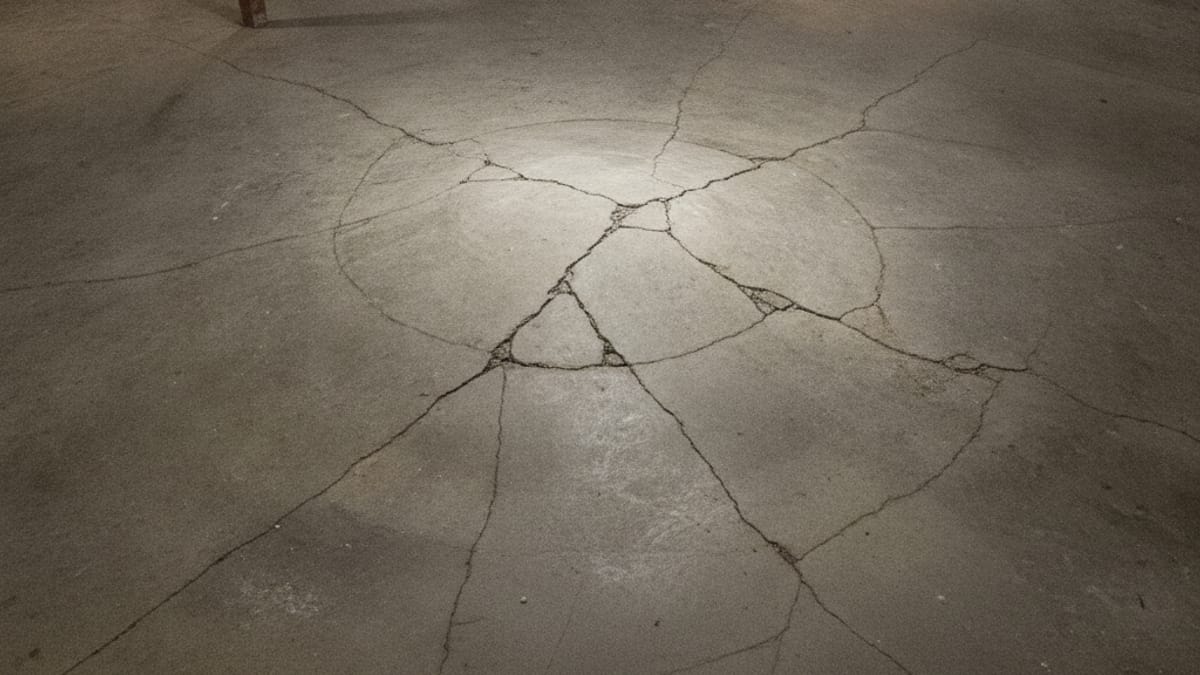
A slab that domes upward in the center. Heave often lifts the middle of a slab, so the floor is higher in the center than at the perimeter. This central doming is a strong indicator of heave rather than settlement.
Cracks that are wider at the top. When part of the slab is pushed up, cracks tend to open wider at the top than at the bottom, the reverse of the pattern typical of settlement.
Doors and windows sticking at the top. As a section lifts, door and window frames rack so that the top binds. Doors that catch or stick along the top edge point toward upward movement.
A hump in the floor. A localized rise or ridge in the floor, often over a wet spot or a plumbing line, is a classic heave sign.
Secondary Signs
- Cracks in the interior slab, especially near the center
- Tile or flooring lifting or tenting along a line
- Gaps opening at the base of interior walls as they are pushed up
- Movement that tracks with wet seasons, irrigation, or a suspected leak
Heave vs Settlement
Telling heave apart from settlement is the single most important step, because the two conditions call for opposite repairs. The direction of movement, where it appears, and the crack pattern all help, and a professional confirms it with an elevation survey.
| Factor | Heave | Settlement |
|---|---|---|
| Direction of movement | Up (soil swells or freezes) | Down (soil loses support) |
| Usual location | Center of slab, over wet zones | Edges and corners |
| Floor shape | Domes or humps upward | Slopes or dips downward |
| Crack width | Wider at the top | Wider at the bottom |
| Doors and windows | Stick at the top | Stick and gap toward the low area |
| Typical trigger | Added water, freezing, tree removal | Drought, erosion, poor compaction |
| Usual repair | Moisture and soil management, sometimes slab removal | Piers and underpinning |
The visual signs point you in a direction, but they are not proof on their own. A professional uses an elevation survey, measuring floor heights across the whole footprint, to map the high and low points. That map shows whether the structure has risen or dropped and where, which is what separates heave from foundation sinking with confidence.
Why Diagnosis Matters
The reason diagnosis comes first is that the fix for heave and the fix for settlement are not interchangeable. Settlement needs support restored beneath the foundation, usually with piers driven to stable soil. Heave needs the opposite approach, controlling the moisture or frost that is pushing the foundation up and, in some cases, removing and repouring a slab that has been lifted out of plane.
If a heaving foundation is treated with piers as though it were settling, the piers do nothing to stop the swelling soil, and the underlying cause keeps working. Soil type is a major factor in how a home moves and in what the correction costs, which is covered in how soil type affects foundation repair cost. Getting the diagnosis right protects you from paying for the wrong repair.
Repair Approaches for Heave
Identify and Stop the Moisture Source
Every heave repair starts with the cause. If a plumbing or sewer leak is feeding water under the slab, it has to be found and fixed, usually with a pressure test to confirm the line. If drainage or irrigation is the source, that gets corrected. Stopping the water is what stops the soil from swelling further.
Moisture Barriers and Drainage
Once the immediate source is handled, the goal is stable soil moisture. Improved grading, working gutters and downspouts, and moisture barriers help keep the subsoil from cycling between wet and dry. Steady moisture reduces the swelling and shrinking that drives movement on expansive clay.
Removing and Repouring a Heaved Slab
When a slab has heaved far enough that it cannot be brought back into plane by managing moisture, the affected section may need to be removed and repoured after the soil is stabilized. This is a larger repair and is reserved for cases where the slab is badly out of level or cracked.
Why Underpinning Is Usually Not the Fix
Underpinning and piers address downward settlement by transferring load to stable soil at depth. They do not counter upward swelling. For heave, underpinning is usually not the right tool, and a plan that leads with piers for a heave problem is a sign the diagnosis needs a second look.